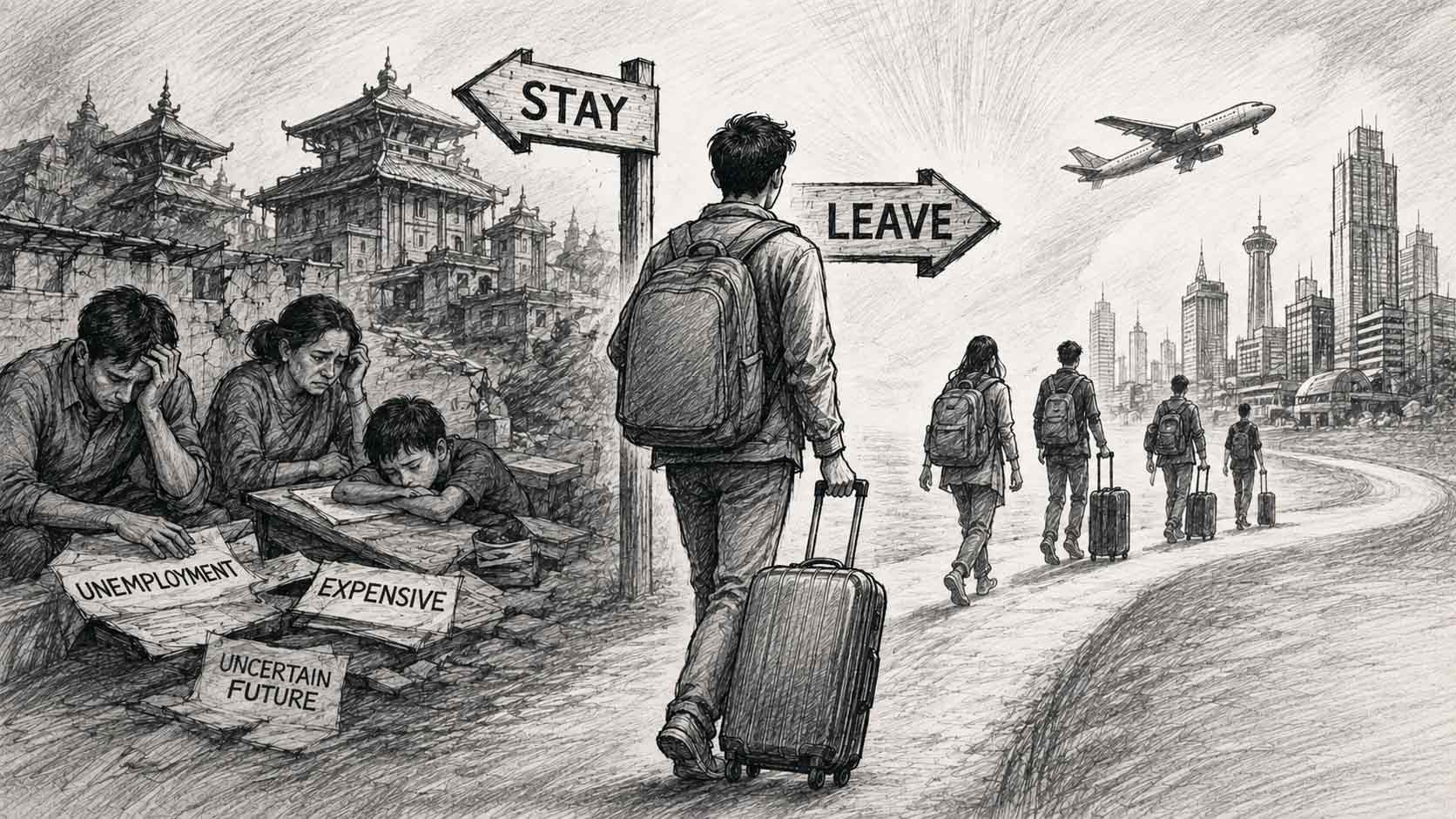
Kathmandu, August 23, 2026 — For a growing number of Nepalis, the question is no longer simply whether they want to go abroad. It is whether staying in Nepal still offers a realistic path to a secure and dignified life.
Every year, thousands of young Nepalis prepare for language tests, entrance examinations, recruitment interviews and visa applications. Some leave for universities; many more leave for employment. Their destinations vary, but the motivation is often remarkably similar: better wages, greater employment opportunities, professional growth and the hope of building a more financially secure future.
This does not necessarily mean that Nepalis have lost faith in their country. Rather, it raises a more uncomfortable question: has Nepal created enough reasons for its young population to stay?
The evidence suggests that migration has become deeply embedded in Nepal's economic and social structure. The World Bank estimates that more than 7 percent of Nepal's population had migrated abroad by 2021, mainly in search of employment. The IMF's 2026 analysis similarly describes outward migration as the dominant response to limited domestic opportunities, particularly among young people.
The scale of the movement is also reflected in more recent data. During the first six months of fiscal year 2025/26, 206,807 Nepali workers received first-time approval for foreign employment, while another 194,733 received approval for renewed entry, according to Nepal Rastra Bank.