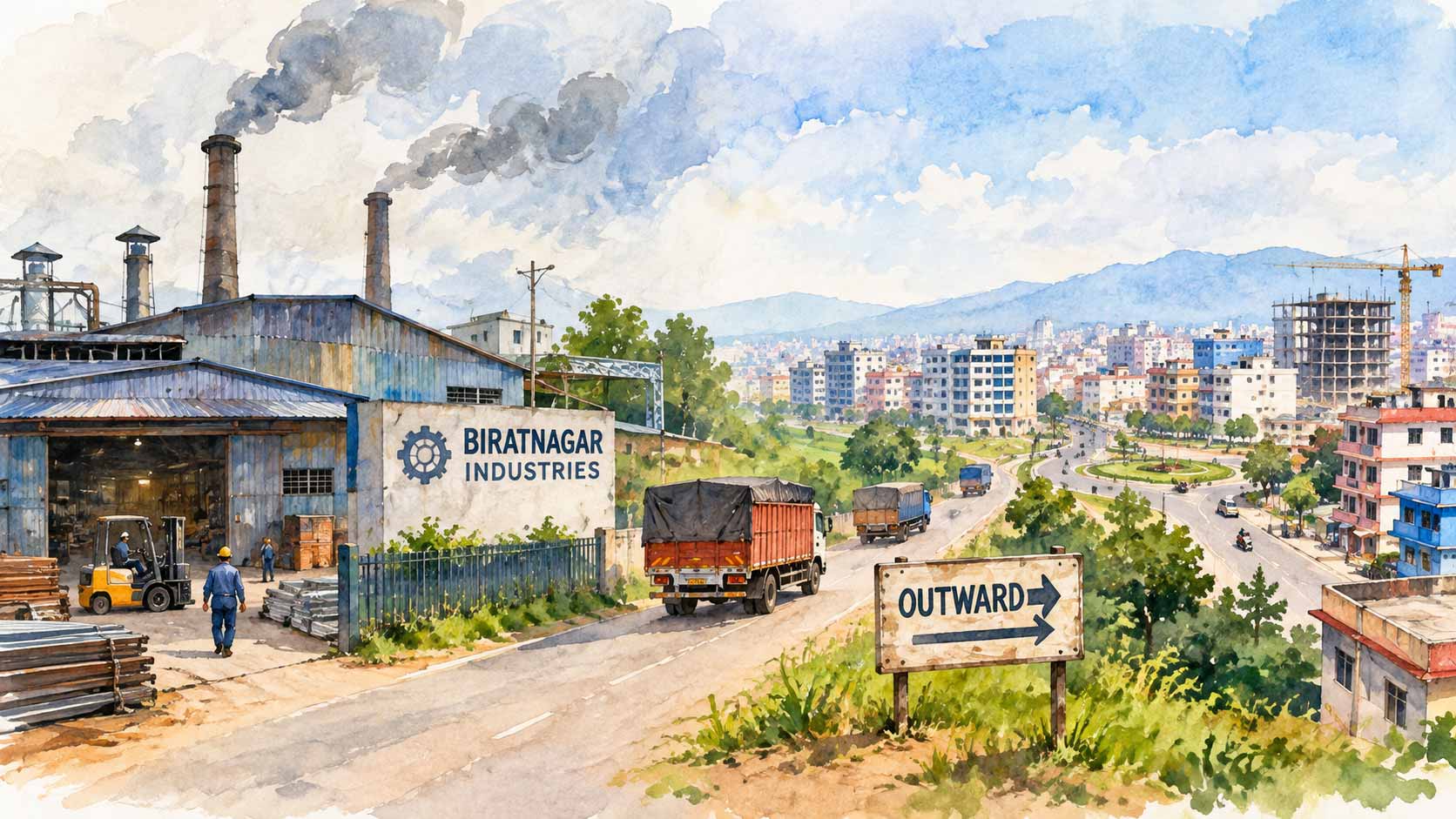
Biratnagar, October 7, 2026 — Chandra Shiva Rice and Oil Mill, one of Biratnagar’s oldest industries, has moved from Thulo Mill Chowk to Hattimuda in Budhiganga Rural Municipality, reflecting the broader movement of industries away from the city.
The mill was among the earliest industries in northern Biratnagar, and settlements gradually developed around it. The intersection east of Kanchanbari became known as Thulo Mill Chowk because of the factory. Although the mill has now relocated, the name remains.
Biratnagar has a long industrial history. Biratnagar Jute Mill, Nepal’s first major industry, was established in the southern part of the city. It was followed by Morang Sugar Mill, Ashok Textile, a match factory and several other industries. The southern Rani area is still known as the Mills Area.
These factories helped establish Biratnagar as Nepal’s first major industrial center. The city also became the birthplace of the country’s labor movement when workers at Biratnagar Jute Mill launched strikes demanding their rights. The site associated with those protests is still known as Hadatali Haat.
Industries also drove Biratnagar’s economic growth. Early factories provided employment and markets for agricultural products from Morang and neighboring districts. They processed locally produced jute, cotton, rice and oilseeds and exported finished products.