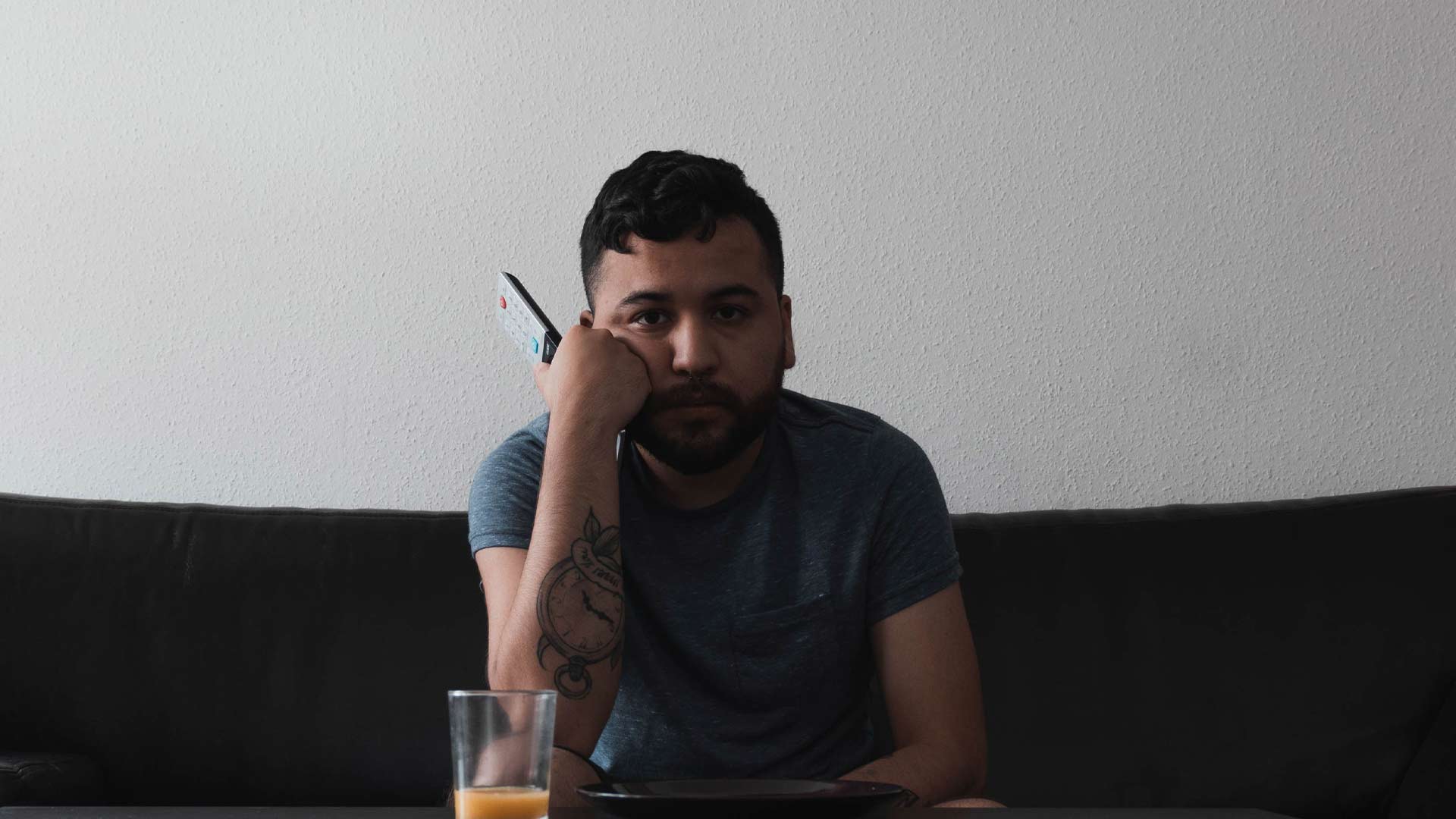
Now they are often treated as problems to be solved.
We fill them.
And perhaps that matters more than we realise.
When the outside world stops demanding our attention, the mind does not necessarily stop working. It can remember, imagine, rehearse conversations, connect unrelated ideas and wander into questions that never arise when attention is continuously occupied.
Research on daydreaming has highlighted the potentially adaptive role of what researchers call positive constructive daydreaming. Other research has found relationships between creative thinking and the way people engage with their thoughts when external task demands are relaxed.
This does not mean boredom automatically makes people creative.
That would be another oversimplification.
A 2014 study, for example, found that participants exposed to boring activities subsequently performed better on some measures of creative thinking. But boredom is not a magic creativity button, and later research has produced a more nuanced picture of the relationship between idle thought, attention and creativity.
The more defensible point is that an unfilled mind has room to move.
And modern life increasingly gives the mind very little unfilled space.
There is also a cultural change taking place.
We have begun to expect every experience to be interesting.
A long video is too long.
A slow film is boring.
A quiet restaurant needs background music.
A short journey needs a podcast.
A few minutes alone require a screen.
Even reading a book can become difficult because the mind has become accustomed to the possibility of immediate novelty.
The danger is not boredom itself.
It is our intolerance of it.
If every uncomfortable feeling is immediately escaped, we never discover what might happen if we remain with it.
That matters because boredom can sometimes be a transition rather than a destination.
A person becomes bored with scrolling and starts drawing.
Someone becomes tired of watching videos and picks up a guitar.
A child complains that there is nothing to do and eventually invents a game.
A commuter looks out of a window and begins thinking about a problem that has been occupying their mind.
Nothing guarantees that these things will happen.
But they become less likely when the next distraction is always one tap away.
This is particularly relevant for children.
A child who says, “I’m bored,” is not necessarily asking for entertainment. Sometimes the child is asking for help tolerating the absence of entertainment.
There is an important difference.
If every moment of boredom is solved by an adult handing over a phone, the child may learn that boredom is something that must immediately be removed rather than experienced and managed.
That does not mean children should be deliberately deprived of technology or entertainment. It means they also need opportunities to play, wait, imagine, explore and spend time without constant digital direction.
Adults need those opportunities too.
Perhaps the real skill we are losing is not the ability to become bored.
It is the ability to stay bored without immediately doing something about it.
That is a subtle but important difference.
Boredom can be a signal. If we are bored because our work is meaningless, perhaps the answer is to change the work or reconnect with its purpose. If we are bored because a task is too easy, perhaps we need a greater challenge. If we are bored because we are exhausted, perhaps we need rest.
Simply enduring boredom is not always the solution.
But neither is automatically escaping it.
Sometimes the correct response is to listen.
Modern technology makes that harder because it has made escape extraordinarily cheap.
We no longer need to leave the room to find stimulation. We carry an almost unlimited supply in our pockets.
That convenience has changed our expectations.
Silence feels empty.
Waiting feels inefficient.
Stillness feels unproductive.
And boredom begins to look like a failure.
But a life without boredom is not necessarily a better life.
Some of the most ordinary human experiences require periods in which nothing particularly exciting happens.
Walking.
Thinking.
Waiting.
Looking.
Remembering.
Wondering.
Being alone with one's thoughts.
These activities do not produce notifications, streaks or measurable engagement.
They may nevertheless produce something valuable: attention that is not constantly being claimed by something else.
The goal, then, should not be to romanticise boredom or reject technology.
It should be to recover our ability to choose.
Choose the phone when we actually want it.
Choose entertainment because we enjoy it, not because we cannot tolerate a quiet minute.
Choose music, conversation or a video when they add something to the moment.
And sometimes choose nothing.
Put the phone down.
Look out the window.
Walk without a podcast.
Stand in a queue without opening an app.
Let a few minutes pass without filling them.
At first, it may feel uncomfortable.
That may be the point.
We may not be losing the ability to be bored.
We may simply be forgetting that boredom does not always need to be fixed.
Sometimes, when there is finally nothing competing for our attention, the mind begins doing something of its own.