All of that disappeared within minutes.
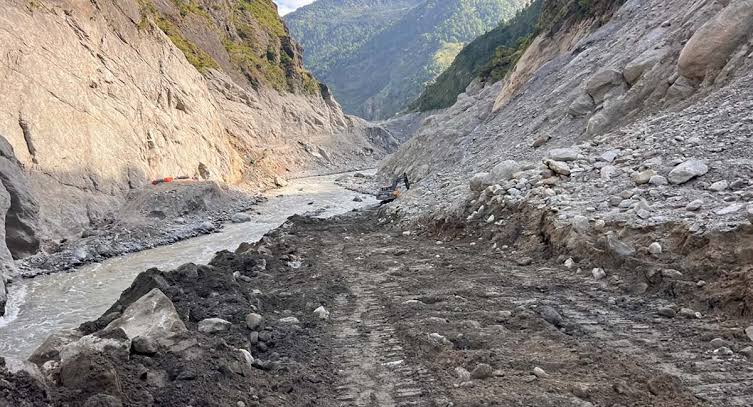
When she later heard that water was flowing over the site where her house had stood that morning, she initially found the news difficult to accept.
Her shop was also in danger. It contained goods worth approximately Rs 2 million. Lama could not lock it before escaping and later learned that somebody else had secured it.
Her next destination was the school.
The walk normally took more than half an hour. She reached it in roughly 10 minutes.
Her colleagues were astonished when she appeared. With telephone connections failing, they had feared that Lama had also been swept away.
“They thought that the flood had swept me away too,” she said. “They were sitting in shock, thinking they would never see me again. When I arrived running, they were both overjoyed and astonished.”
Lama says she survived by chance.
She normally spent considerable time in the kitchen on the top floor of her house. Had she remained there for another 20 to 25 minutes, she believes she would not have escaped.
She says the flood reached Syaphrubesi by 8:55 a.m.
The physical loss was only one part of the disaster.
Lama says about 15 relatives from her mother's side were swept away. Three of her students and one fellow teacher also went missing.
Those losses have made the idea of returning home difficult for her.
“I cannot go back there anymore. I cannot live there,” she said.
After reaching the school, Lama continued moving uphill with other residents seeking safety. Later that day, a Nepali Army helicopter evacuated her, along with injured people, to Kathmandu.
Arriving in the capital did not immediately mean having a place to live.
The Rasuwa Society, an organisation formed by Rasuwa residents living in Kathmandu, helped arrange accommodation for the displaced. Lama and other survivors were taken to the Yellow Gumba.
Initially, survivors from Timure, Syaphrubesi and surrounding areas stayed together. Some were later moved to another monastery in Swoyambhu.
Lama remains at the monastery.
Beds have been arranged in rows inside the large hall, where the displaced people sleep. Food and clothing are being supplied through donations from individuals and organisations, while the Rasuwa Society is helping coordinate the arrangements.
For Lama, however, temporary shelter has not answered the question of what comes next.
She says neither the federal government nor the local government has provided a concrete plan for where the displaced people will eventually go.
“We want to leave here as soon as possible,” she said. “But there is no certainty about where to go or what to do.”
Returning to her former workplace is also not something she currently considers possible.
The place where she taught was also the place where she lost relatives, students and a colleague. Her home and business are gone as well.
Instead, Lama wants to continue her teaching career somewhere in Kathmandu Valley.
She has been talking with the relevant authorities about a transfer.
“If I am transferred somewhere within the Kathmandu Valley, it would be easier,” she said. “I feel like I cannot do anything if I go back there.”
For Lama, the flood did not end when she reached safety. The immediate danger passed, but the life she knew before that morning disappeared with it.
She now faces the difficult task of rebuilding her life without a home, shop or many of the people who formed her community.