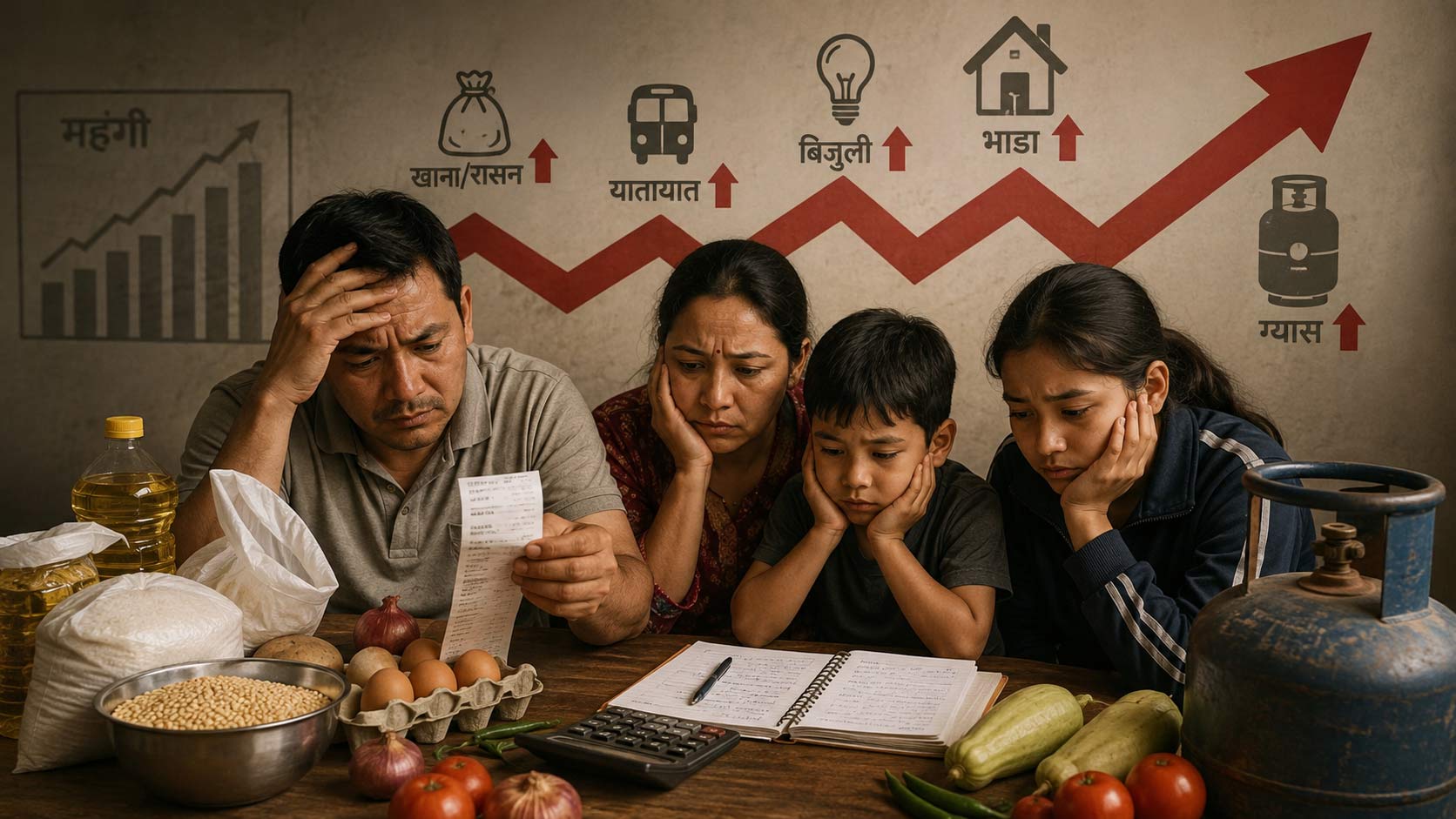
Kathmandu, August 22, 2026 — For an ordinary Nepali household, the problem with rising prices is not simply that food, transport, rent, education and other necessities cost more than they did a few years ago. The bigger concern is whether household income has increased enough to keep pace with those costs.
Official data suggest that it has not always done so.
Nepal Rastra Bank’s National Salary and Wage Rate Index increased by 2.85 percent in the fiscal year 2024/25, while consumer prices increased by an annual average of 4.06 percent during the same fiscal year. In other words, the overall wage and salary index grew more slowly than consumer prices, indicating a decline in purchasing power at the aggregate level.
The difference becomes clearer when viewed over two years. The revised wage index stood at 95.22 in 2022/23 and reached 102.85 in 2024/25, an increase of about 8 percent. Over the same period, consumer prices rose by roughly 9.7 percent when the annual inflation rates of 5.44 percent in 2023/24 and 4.06 percent in 2024/25 are compounded. This means the overall wage index did not fully keep up with the rise in consumer prices during that period.
The pressure becomes particularly important when looking beyond averages. Nepal has a large informal and low-paid workforce, meaning many workers do not necessarily receive automatic annual salary adjustments when the prices of everyday goods rise.