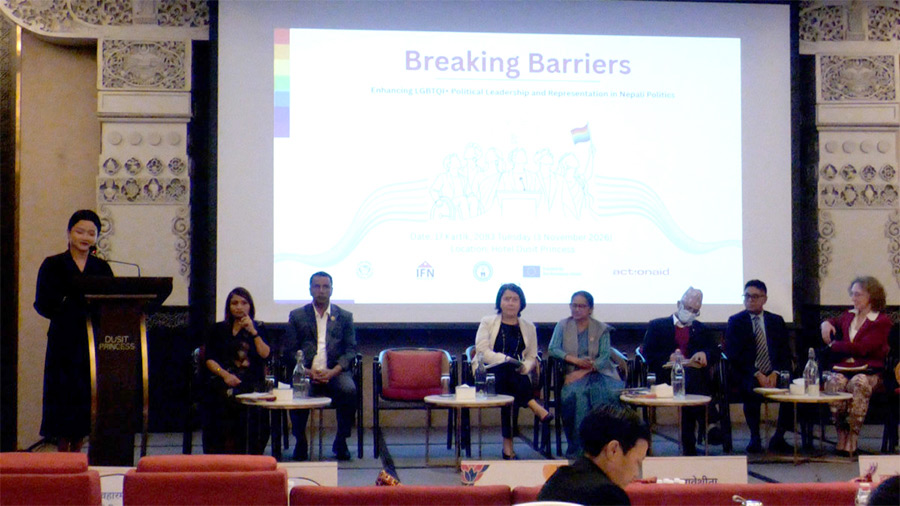
According to the survey, 90.9 percent of respondents said political representation was inadequate, while 68.4 percent said they did not feel safe participating in political activities. Only 17.4 percent reported being affiliated with a political party.
The findings indicate that despite constitutional recognition of their rights, members of these communities continue to face limited access to political parties, leadership structures and policymaking institutions.
The project will focus on four main areas. It will develop political knowledge, capacity and leadership skills among community members; create mentoring opportunities with experienced political leaders and support political party affiliation and candidacy; identify legal, policy, social and institutional barriers to participation and advocate evidence-based reforms; and work with political parties, public institutions, elected representatives and other stakeholders to improve inclusive representation and access to decision-making.
The initiative also aims to challenge discrimination, prejudice and negative social attitudes through media engagement, public discussions, awareness programmes and collective campaigns.
The project targets direct engagement with around 3,000 people and aims to reach approximately 900,000 people through communication, advocacy and social transformation activities.
Although Nepal has made significant progress in recognising the identity and constitutional rights of sexual and gender minorities, translating those rights into meaningful political influence, leadership and participation in decision-making remains a challenge.
Limited access within political parties, social prejudice, discrimination, insecurity and institutional barriers have continued to constrain representation.
The project aims to turn constitutionally recognised rights into meaningful political participation, participation into representation, and representation into the ability to influence policies and decisions.