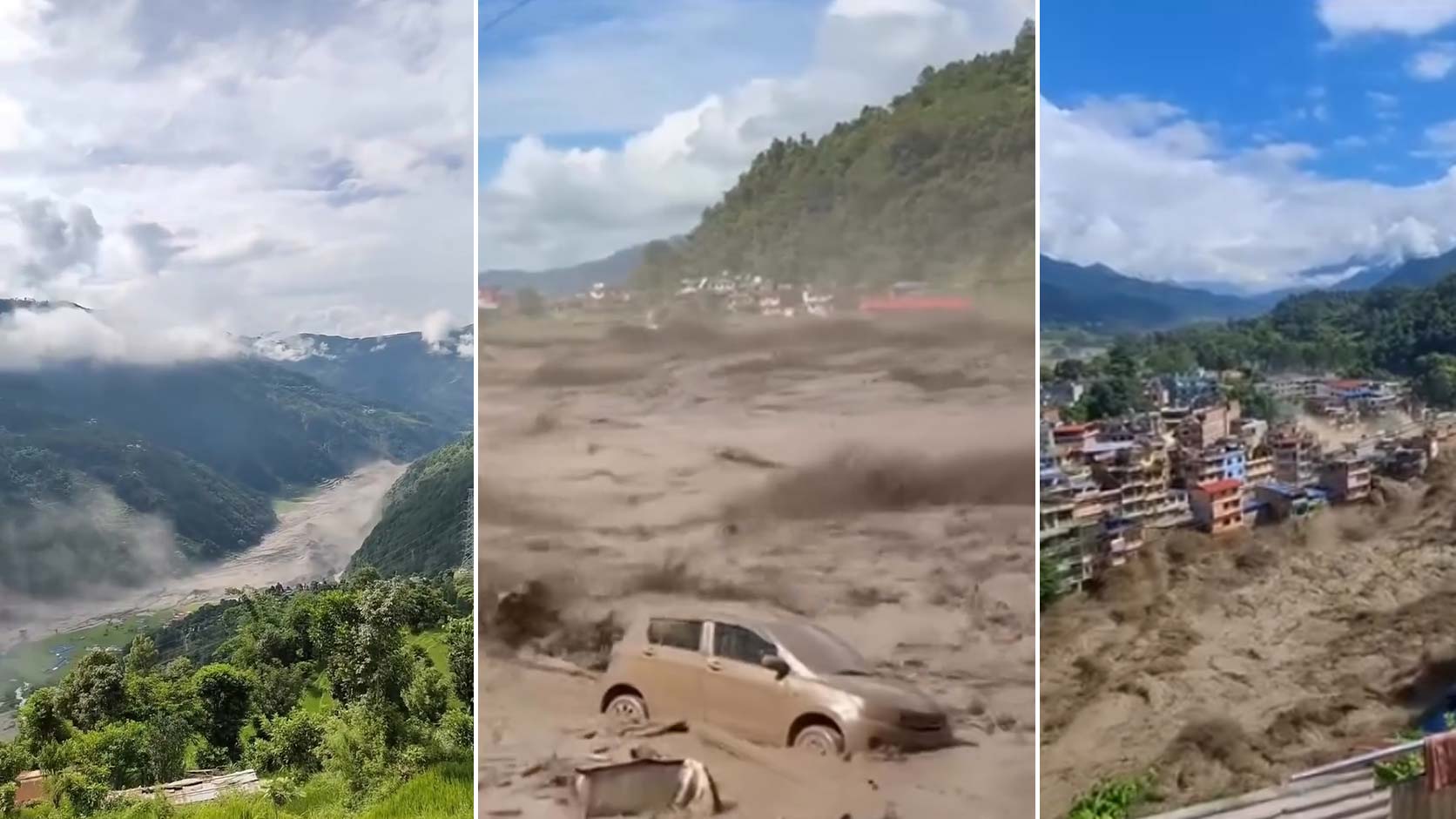
Rasuwa, August 26, 2026 — A preliminary assessment by Nepal’s Department of Hydrology and Meteorology indicates that the massive flood that swept through Rasuwa was unlikely to have been triggered by rainfall within the district, raising the possibility of a glacial lake outburst or another sudden release of water on the Tibetan side.
Meteorologist Sanjib Adhikari said Rasuwa had received only limited rainfall over the previous 24 hours. While some areas of neighbouring Sindhupalchok experienced heavy to very heavy rain, most parts of Rasuwa recorded light to moderate rainfall, with the Thambuchet station measuring about 7 millimetres.
Rainfall data from the preceding 12 hours also showed declining precipitation in Sindhupalchok and no significant additional rainfall in Rasuwa, according to Adhikari. Based on those observations, the Meteorological Forecasting Division has preliminarily concluded that local rainfall does not appear sufficient to explain the scale and suddenness of the flooding.
Satellite imagery has also been examined as part of the assessment. Adhikari said the images showed dense cloud cover over areas including Dolakha, Sindhupalchok and the Tibetan region, while relatively less cloud cover was seen over Rasuwa and nearby areas.
Authorities are therefore investigating whether a glacial lake outburst or a breach of a dam or other water-retaining structure on the Tibetan side triggered the sudden surge. The cause has not yet been confirmed, and officials are continuing to examine satellite imagery and other available information before reaching a final conclusion. The Department of Hydrology and Meteorology has also been coordinating with Chinese authorities regarding the source of the flood.