The government had reportedly begun preparing for Karki's removal about a week earlier. Journalists who published reports concerning alleged pressure from the Prime Minister's Secretariat on the IGP to resign, as well as a reported conversation between Supreme Court Justice Hari Krishna Karki and Sapkota while the latter was in police custody, were arrested.
Following widespread criticism, the government distanced itself from the arrests, saying it had not issued any such order.
Police, however, said the journalists had been summoned to identify their sources after publishing what the police described as false reports about the relationship between the prime minister and the police chief.
Karki also faced criticism over his failure to reject what critics described as an improper instruction to arrest the journalists.
According to a source, allegations that Karki had disclosed information about pressure from the Prime Minister's Office to arrest the journalists and about Kumar Ben's alleged possession of Sapkota's mobile phone also contributed to the decision to remove him.
After reports emerged that the government intended to replace him, Karki convened a meeting of the Police Policy Committee.
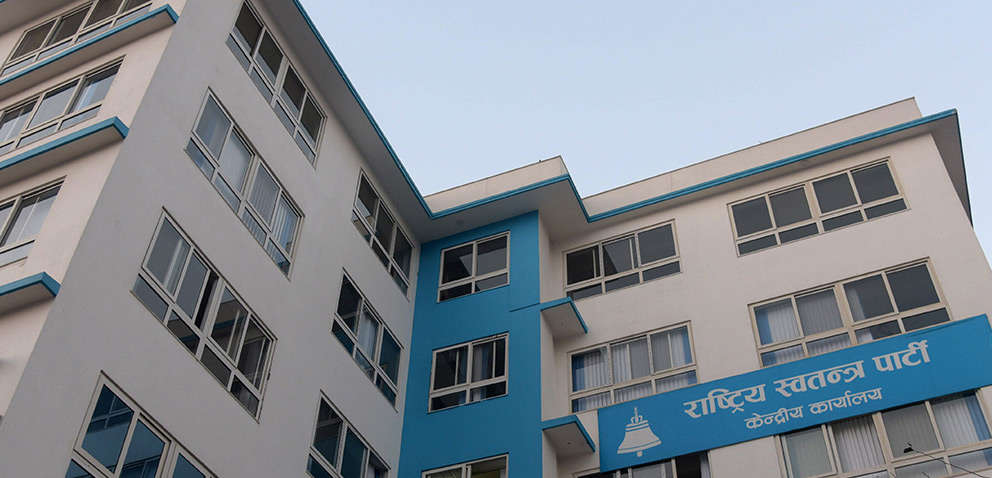
The leadership change also reportedly went against the preference of Rastriya Swatantra Party (RSP) chairperson Rabi Lamichhane. Prime Minister Shah and Lamichhane had discussed the matter.
On October 31, the RSP Secretariat decided that the government should investigate the arrests of journalists. The government did not implement that directive and instead proceeded with Karki's removal.
The decision also exposed differences in public statements from the government and the RSP. Government spokesperson Sasmit Pokharel said Karki had been removed and KC appointed in accordance with the party's directive. RSP spokesperson Jagdish Kharel, however, denied that the party had issued such an instruction.
Karki prepares to approach Supreme Court
Following his transfer to the prime minister's security adviser position, Karki is preparing to challenge the government's decision through a writ petition at the Supreme Court.
An officer close to Karki said preparations were underway to file the petition on Thursday against the government's decision taken a day earlier.
A similar dispute over the removal of a police chief reached the Supreme Court nearly three decades ago.
Achyut Krishna Kharel, who became IGP in February 1997 (Falgun 2053 BS), was transferred to the Department of National Investigation in March of that year. Dhruva Bahadur Pradhan was appointed to replace him.
At the time, Sher Bahadur Deuba was prime minister and Bamdev Gautam was home minister. Kharel challenged the government's decision in court.
While the case was still pending, the government changed in October 1997 (Ashoj 2054 BS). The administration led by Surya Bahadur Thapa reinstated Kharel as IGP and transferred Pradhan to the security adviser position.
Pradhan subsequently resigned after his transfer.
With the government replacing another police chief after nearly 30 years, attention has turned to whether Karki will proceed with his legal challenge and how the Supreme Court will respond.
Who is the new IGP Manoj Kumar KC?
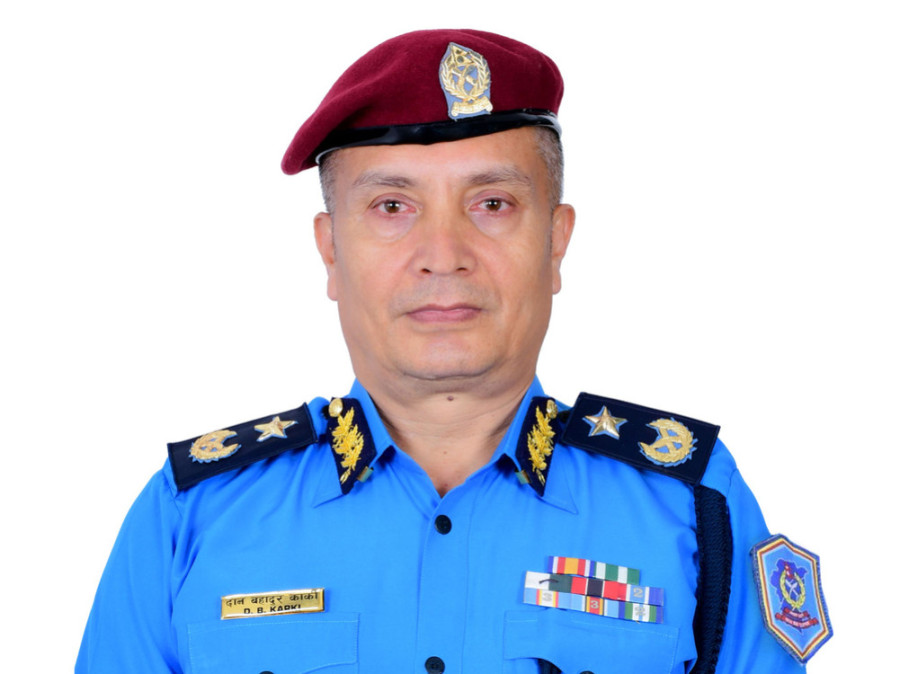
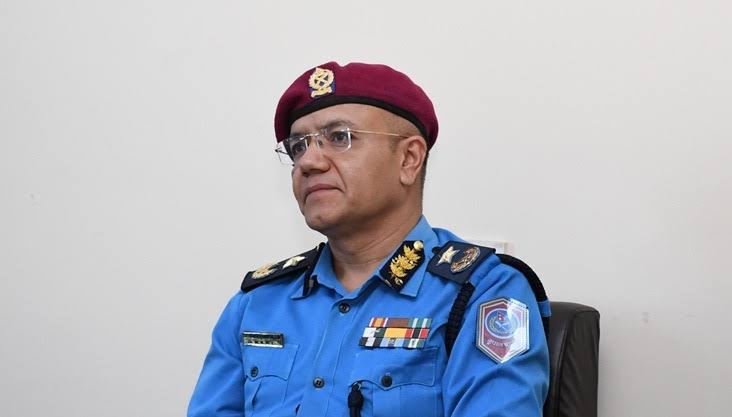
Newly appointed IGP Manoj Kumar KC and outgoing chief Dan Bahadur Karki belong to the same batch of Nepal Police officers.
KC joined Nepal Police as an inspector in 1997 (2054 BS) and is originally from Nuwakot district. He was promoted to Deputy Superintendent of Police (DSP) in 2010 (2066 BS).
He subsequently became Superintendent of Police (SP) in 2017 (2074 BS), Senior Superintendent of Police (SSP) in 2022 (2079 BS), Deputy Inspector General (DIG) in 2024 (2081 BS) and Additional Inspector General (AIG) in 2025 (2082 BS).
Within the police organisation, KC is regarded as a professional officer known for his straightforward approach.
During his tenure as SSP, he headed the Kathmandu Valley Crime Investigation Office and led the investigation into the fake Bhutanese refugee scam. Former Home Minister Bal Krishna Khand and former Deputy Prime Minister Top Bahadur Rayamajhi were convicted in the case.
KC holds a PhD in conflict transformation from Cambodia. Before his appointment as IGP, he headed the Central Investigation Bureau (CIB) as an AIG.
Under the current retirement rules, he is expected to lead Nepal Police for approximately 18 months.
Speaking after receiving the IGP insignia on Wednesday, KC identified resource management, personnel transfers and promotions, and addressing grievances among junior police officers as major challenges.
He said he would prioritise investigations into financial crimes, illegal cryptocurrency transactions and cybercrime.
KC also pledged to address security challenges that emerged following the events of September 8 and 9 last year. He announced plans to establish a dedicated team within the IGP's Secretariat to receive and address complaints from junior police personnel.