There is also a danger in focusing too heavily on the dramatic images.
A bridge collapsing is visible.
A house being swept away is visible.
A river carrying vehicles downstream is visible.
But grief is mostly invisible.
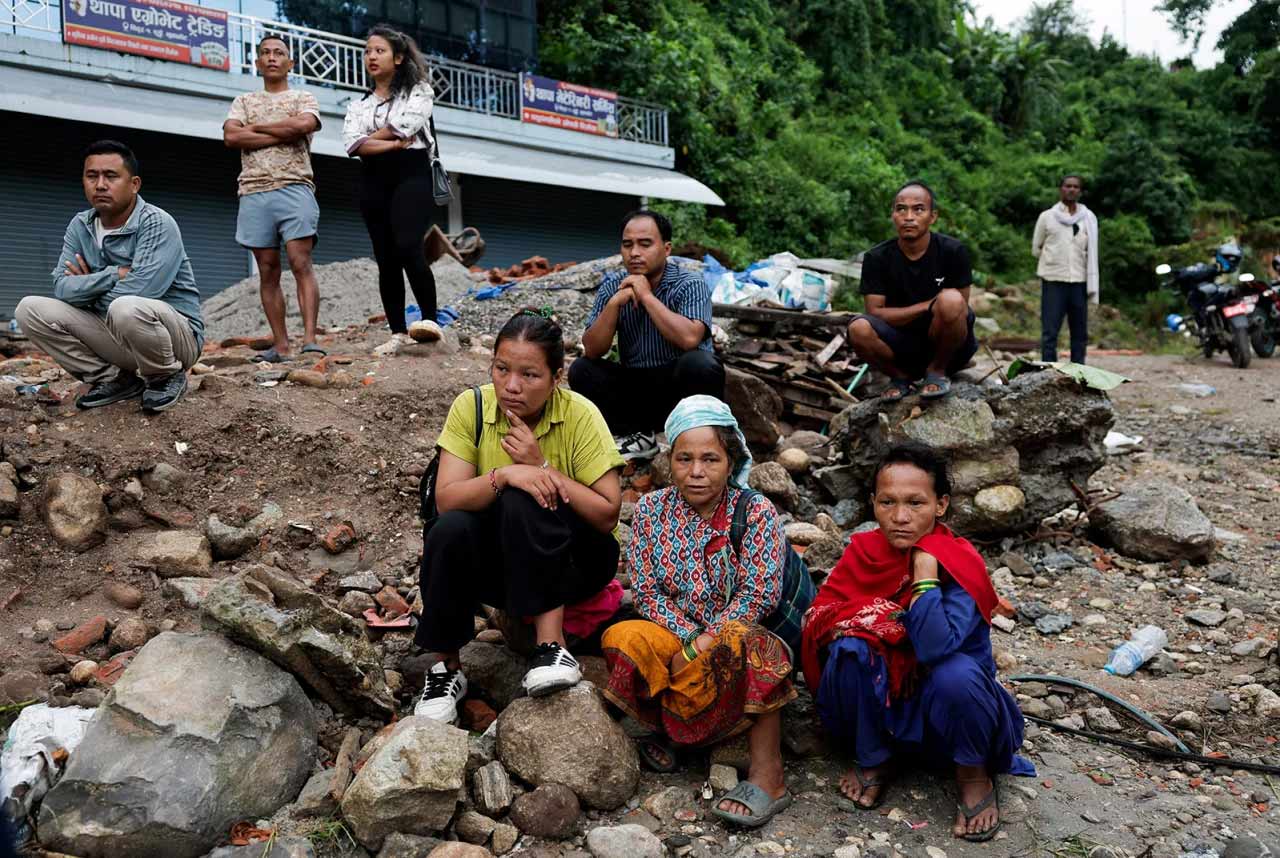
It appears later, when a family returns to a damaged home and realizes that one person is missing. It appears when a child's school uniform remains untouched. It appears when a shopkeeper looks at the place where the shop once stood and remembers the person who helped build it. It appears when families begin asking not how much property they lost, but how they will live without someone they loved.
That is the deeper destruction of a disaster.
The flood did not only destroy places where people lived. It disrupted relationships built around those places.
A home is where family members expect one another to return.
A shop is where a livelihood is built.
A road is how people reach one another.
A bridge is how communities remain connected.
When these disappear simultaneously, the physical destruction becomes inseparable from the emotional one.
The disaster has also raised difficult questions about how quickly a Himalayan community can be protected when an extreme event develops with little warning. The precise mechanism behind the flood was initially unclear, but subsequent assessments have pointed to an ice-rock or glacial collapse upstream that generated a sudden debris-laden surge. The US Geological Survey later clarified that the seismic signal initially interpreted as an earthquake was generated by the collapse itself.
Whatever the final scientific explanation, the people left behind face a much simpler reality.
They have to find their missing relatives.
They have to identify the dead.
They have to bring survivors to safety.
And eventually, they have to decide how to rebuild.
As of Thursday, rescue teams had recovered 123 people from Timure by helicopter, including 94 Nepalis and 29 foreign nationals. Search operations were continuing, with authorities still collecting details about casualties and damage.
The final scale of the tragedy is therefore not yet known.
The number of recovered bodies may rise. Some people currently listed as missing may be found alive. Others may be identified among those who have died. Figures may also change as Nepal and Chinese authorities reconcile information from the two sides of the border.
That uncertainty should not be filled with speculation.
What is already certain is that families have lost loved ones, homes and livelihoods, while many others are still waiting.
Eventually, roads will be rebuilt.
Bridges will be reconstructed.
Power lines will be restored.
Markets may reopen.
New houses will be built on safer ground.
But none of those things will restore the person who is no longer there.
For the families affected by the Bhote Koshi flood, rebuilding will therefore mean more than restoring concrete, steel and asphalt. It will mean learning how to live around an absence that cannot be repaired.
The flood may have swept away roads and bridges in minutes.
For the people who lost someone, its consequences will last far longer.
And when the river settles, the deepest question will not be how quickly the roads can be rebuilt.
It will be how the people left behind can rebuild their lives.