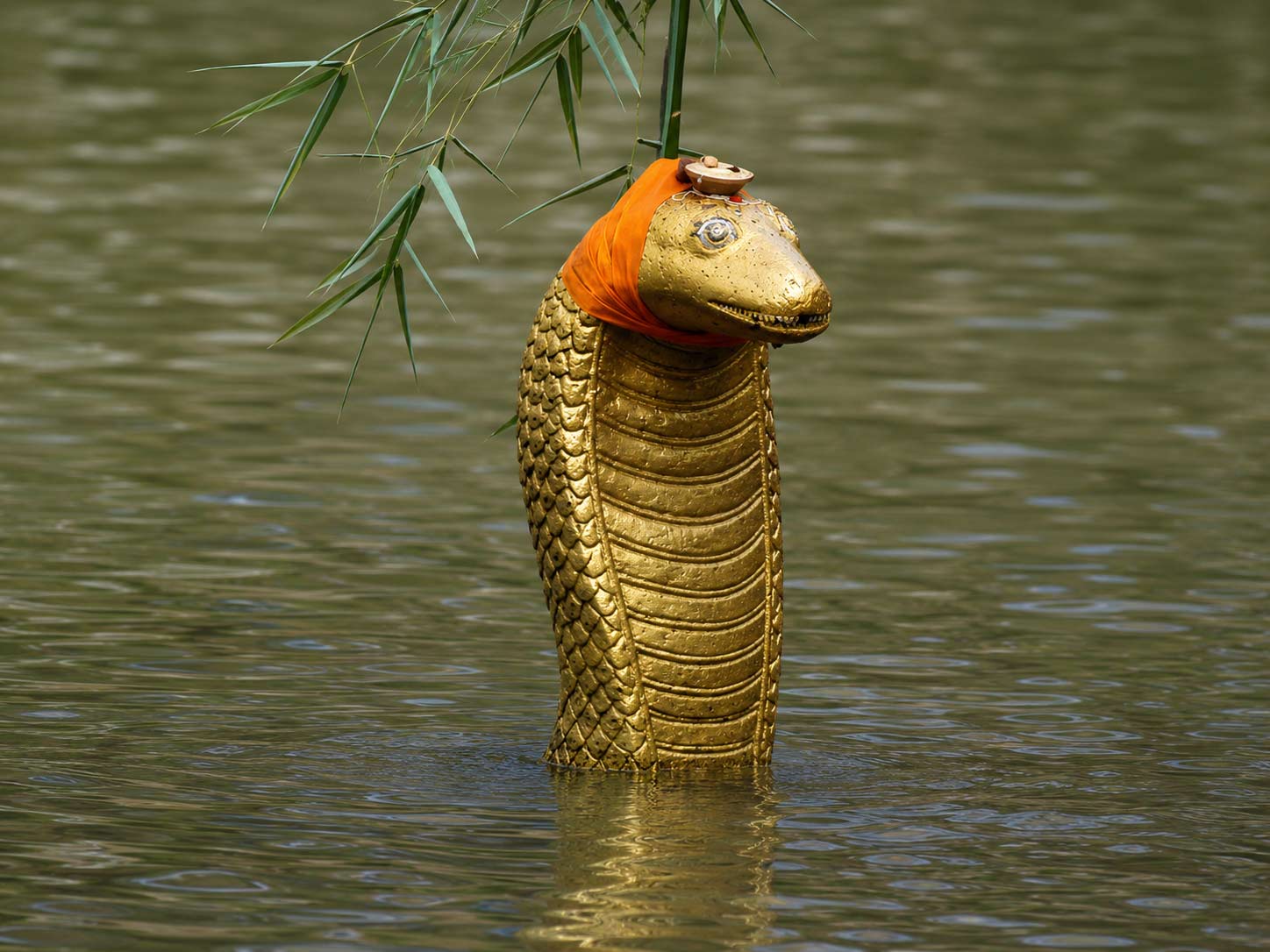
Kathmandu, August 17, 2026 — Naag Panchami, a Hindu festival dedicated to the worship and reverence of Naagas, or serpent deities, is being observed across Nepal today, on the fifth day of the bright fortnight of Shrawan. In the Nepali calendar, the festival falls on Bhadra 1, 2083, while the lunar tithi remains Shrawan Shukla Panchami.
Naag Panchami holds an important place in Nepal’s religious and cultural traditions. The festival combines mythology, household worship, reverence for nature and long-standing beliefs about serpents as guardians associated with water, rainfall and the earth.
In Nepal, one of the most recognizable traditions is placing an image of a Naaga above the main entrance of a house. Devotees worship the image with offerings and prayers, seeking protection and prosperity. Nepal’s Ministry of Culture-affiliated Sanskritik Sansthan notes that images representing eight principal Naagas are traditionally placed above doors, accompanied by offerings such as milk, yoghurt, rice grains, flowers and sacred grass.
Naag Panchami is observed on Shrawan Shukla Panchami, the fifth lunar day of the waxing half of the month of Shrawan. Because the Hindu lunar calendar does not correspond to a fixed Gregorian date, the festival changes dates from year to year. In 2026, Nepali calendar sources identify August 17 as Naag Panchami. The Panchami tithi continues until approximately 6:57 pm. Nepal time before Shashthi begins.
The festival is not limited to one particular form of serpent worship. In Hindu religious traditions, Naagas are described as powerful serpent beings and are associated with several major figures and stories. Among the best-known are Shesha, the serpent associated with Lord Vishnu; Vasuki, who appears in the story of the churning of the ocean; Takshaka, a prominent serpent in the Mahabharata; and Kaliya, the serpent subdued by Krishna in the Yamuna.