The same contradiction appears in the question of accountability.
An inquiry led by former chief justice Gauri Bahadur Karki concluded that police used excessive and indiscriminate force during the protests. The report said security forces continued firing for hours and criticised both the security forces and political leadership. Former prime minister Oli and former home minister Ramesh Lekhak were arrested in connection with the deaths but were later released after the Supreme Court considered a habeas corpus petition. Formal prosecution has remained unresolved.
Human Rights Watch has also called for the findings of the inquiry into the September violence to be made public and for accountability for unlawful acts by both security forces and those involved in the violence that followed.
This is where the promise of the movement meets the machinery of the state.
The young people who protested were asking a basic democratic question: Why should those in power be above accountability?
If that question is answered differently depending on who holds office, then the political colour may have changed without the political culture changing enough.
There is another measure of the movement’s legacy: the generation’s relationship with Nepal itself.
For years, young Nepalis have faced an increasingly familiar choice—stay and struggle, or leave in search of work, education and dignity.
The Gen Z uprising was partly an expression of that frustration. Young people were not simply demanding better politicians. They were asking whether the country could become a place where their ambitions could be fulfilled without having to leave it.
That question remains unresolved.
A new generation has entered Parliament. A young prime minister occupies Singha Durbar. Older political parties have suffered an electoral shock. The vocabulary of Nepali politics has changed.
But changing the faces at the top is easier than changing the structures underneath.
Corruption does not disappear because a new party wins an election.
Nepotism does not end because politicians post about merit.
Public services do not improve because a government calls itself reformist.
And democracy does not become stronger simply because young people vote in greater numbers.
The real legacy of September 2025 will be measured much further down the road—in whether public institutions become more transparent, whether corruption investigations become politically neutral, whether appointments are based on merit, whether police accountability becomes real, whether public services work, and whether young Nepalis can see a future for themselves at home.
There is also a darker lesson that must not be forgotten.
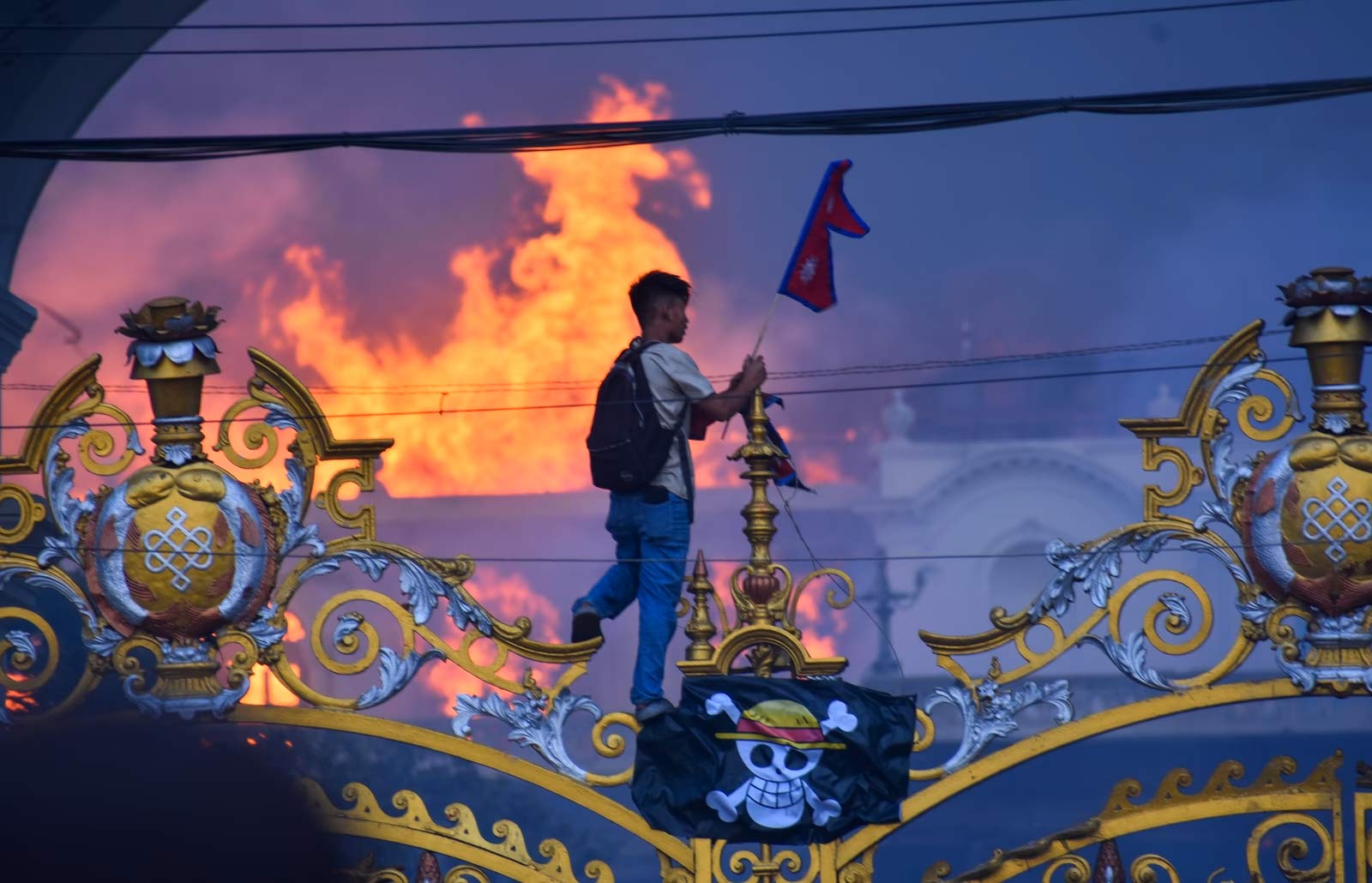
The violence of September 9 cannot be romanticised as part of the movement’s success. Human Rights Watch documented attacks on politicians, journalists, police, businesses, schools and public institutions, along with widespread arson. Some protesters and others were killed. Three police officers were also killed in mob attacks.
A movement for a better democracy cannot excuse violence simply because the anger behind it was real.
Nor can the violence of the second day be used to erase the legitimate grievances of the first.
Both truths have to coexist.
The state had a responsibility to protect life.
Citizens had a responsibility not to destroy the lives and property of others.
Justice requires accountability for both.
That may be the most important lesson for the generation that awakened Nepal.
A year ago, young people discovered that they could shake a political system that had seemed immovable.
Now they face a much harder task: keeping power accountable after the protest is over.
The greatest danger for Gen Z is not failure.
It is becoming what it once opposed.
Every generation that enters politics eventually faces the temptation to replace principles with power, accountability with loyalty and public service with personal advancement.
Nepal’s Gen Z generation has already shown that it can say no to an old political culture.
The next test is whether it can build something better.
Perhaps that is why the blood-stained shoes of 29-year-old Prakash Bohora remain such a powerful symbol. His photograph became one of the defining images of the uprising. He survived, but he now walks with crutches and still needs further operations for the leg injured during the protests. Passing New Baneshwor can bring back memories of the day.
The image of those shoes captured something that political statistics cannot.
A revolution is not an abstraction when blood is on the pavement.
It belongs to the person who was shot.
To the mother waiting at home.
To the wife whose husband never returned.
To the student whose plans changed in a single afternoon.
To the young person who still believes Nepal can be better.
And perhaps that is the most fitting tribute one year later—not to turn September 8 into a myth, but to remember why thousands came out in the first place.
They wanted a country where power answered to people.
Where opportunity was not inherited.
Where public office was not a family possession.
Where a young Nepali did not have to choose between dignity and departure.
One year later, Nepal has changed.
The old political order has been shaken. A new generation has entered the centre of power. The country has shown that its political future is no longer guaranteed to belong to the same familiar faces.
But whether Nepal has truly changed will depend on what happens next.
The movement awakened a generation.
Now the generation must decide what kind of country it wants to wake up to.