Taudaha has a particularly strong place in Kathmandu Valley folklore. The valley itself is associated with traditions concerning Naagas and water. According to local religious narratives, Naagas inhabited the ancient lake that is believed in legend to have covered the Kathmandu Valley before it became suitable for human settlement.
Such accounts are part of the Valley’s religious and cultural heritage. They should not be confused with geological evidence about the formation and drainage of the Kathmandu Valley.
Why are Naagas associated with water and rain?
The relationship between Naagas and water is one of the most important themes of the festival in Nepal.
The Kathmandu Valley has historically depended heavily on ponds, springs, rivers and other water sources. In traditional religious culture, Naagas came to be associated with these water bodies and with rainfall. This connection helps explain why Naaga shrines and ponds have such a prominent role during Naag Panchami.
The Nepal Tourism Board specifically describes prayers and offerings to Naagas as being associated with rainfall in the Valley.
The festival therefore carries a cultural message about the importance of water and the natural environment, even though the religious beliefs surrounding rainfall are matters of faith rather than scientific explanations of weather.
Traditional rituals and household practices
Naag Panchami rituals differ between communities, families and regions, so there is no single procedure followed everywhere.
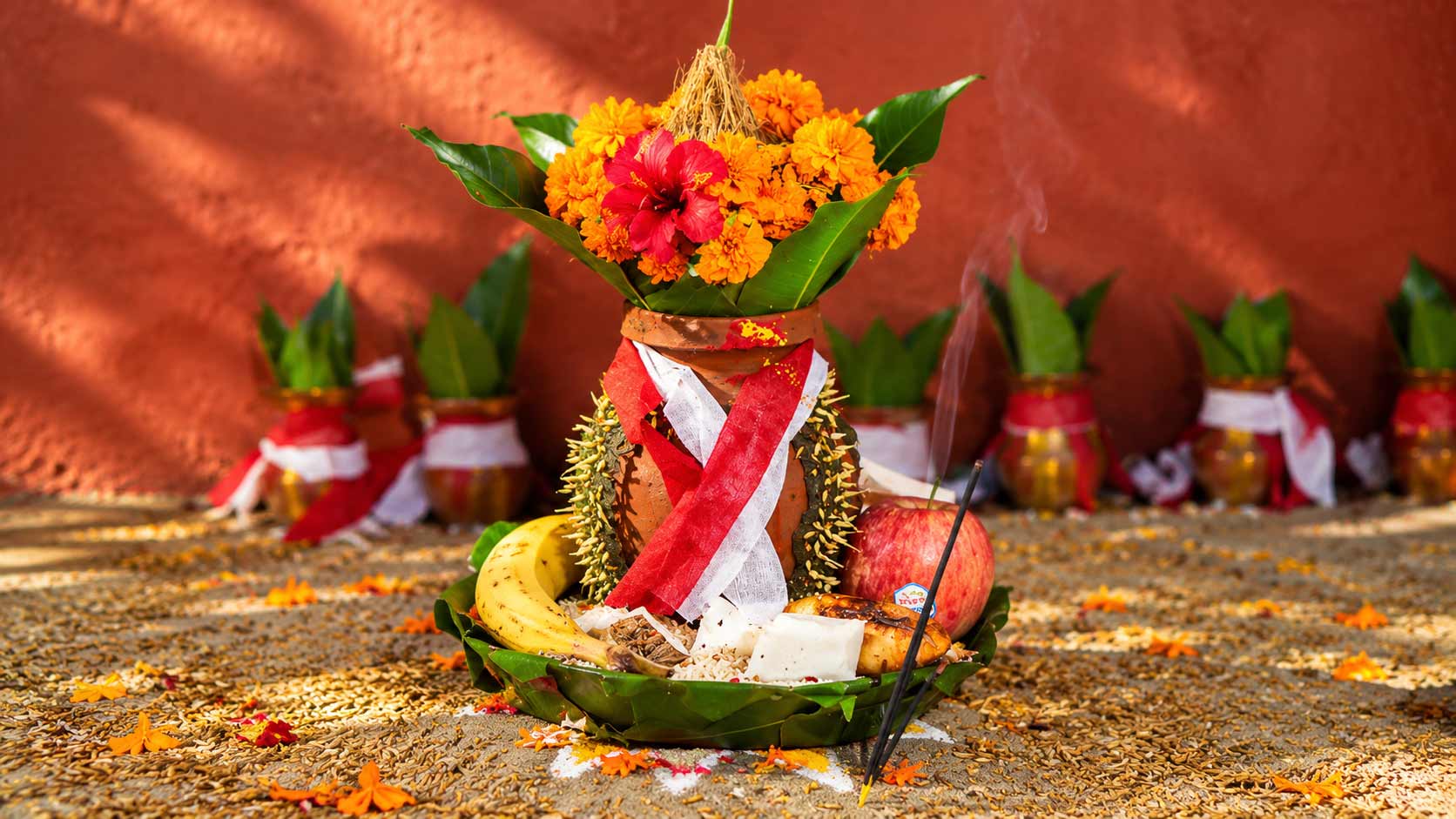
In Nepal, one of the most widespread practices is attaching or displaying a Naaga image above the main entrance of the home. The image may be worshipped with offerings including milk, yoghurt, rice grains, flowers and sacred grass.
Devotees may also visit Naaga shrines and ponds, perform puja, light lamps, offer food and recite prayers. Special religious observances are held at sites such as Naagpokhari and Taudaha in Kathmandu and Siddhapokhari in Bhaktapur.
Some families observe fasting or other forms of religious discipline. Practices involving the worship of Shiva are also common because serpents are closely associated with Shiva in Hindu iconography.
Another traditional belief in Nepal is that activities involving digging or disturbing the ground should be avoided on Naag Panchami. The Sanskritik Sansthan describes this as a religious belief connected with the traditional idea that Naagas inhabit the underground realm.
These customs vary considerably by community and should not be presented as universal requirements of Hinduism.
The eight Naagas traditionally depicted in Nepal
Nepalese cultural tradition commonly refers to eight principal Naagas in connection with the image placed above the doorway. The Sanskritik Sansthan identifies them as Ananta, Vasuki, Padma, Mahapadma, Takshaka, Kulika, Karkotaka and Shankha.
Their names and the lists of Naagas invoked during worship can vary across religious texts and regional traditions. Some other traditions refer to a larger group of Naagas, including figures such as Kaliya, Dhritarashtra and others.
This variation is an important feature of Naaga traditions: Hindu scriptures and regional practices do not preserve one universally identical list for every Naag Panchami observance.
Naag Panchami and the natural world
Although Naag Panchami is fundamentally a religious and cultural festival, its focus on serpents also provides an opportunity to consider the ecological importance of snakes.
Snakes occupy important positions in food chains and can help regulate populations of rodents and other animals. They are also themselves part of wider ecosystems. This ecological role is separate from religious beliefs about Naagas, but it provides a modern environmental dimension to a festival centered on reverence for serpents.
Responsible celebration is therefore important. Wild snakes should not be captured, handled or brought into public gatherings simply for religious display. Worship can be performed through images, statues and symbolic representations without disturbing wild animals.
The festival's traditional emphasis on respecting living creatures can coexist with modern wildlife conservation principles.
Why is milk offered to Naagas?
Milk is among the offerings traditionally associated with Naag Panchami in several parts of South Asia, including Nepal. In religious practice, the offering is symbolic and forms part of the broader tradition of presenting food and other items to deities.
However, offering milk directly to live snakes is not a wildlife-care practice. Snakes are not naturally dependent on milk, and attempting to feed or handle wild snakes can injure both the animal and the people involved.
For this reason, a safer contemporary approach is to offer milk symbolically before an image or idol rather than attempting to feed a live snake.
Naag Panchami and beliefs about protection
Many devotees observe Naag Panchami with the belief that worshipping the Naaga protects households from snakes, scorpions, fire, lightning and other dangers.
The Sanskritik Sansthan records these as traditional religious beliefs associated with placing the Ashta Naaga image above the doorway. Similar beliefs have been reported in Nepalese coverage of the festival.
These should be understood as matters of religious belief, not scientifically established protective effects.
Likewise, claims that Naag Panchami rituals can eliminate astrological conditions such as Kala Sarpa Dosha belong to particular astrological traditions and should not be presented as scientifically established facts.
Naag Panchami as a living cultural tradition
Naag Panchami has survived because it is more than a single ritual. It brings together religious mythology, household customs, local legends, sacred landscapes and ideas about the relationship between people and nature.
In Nepal, the festival is especially visible through the Naaga images placed on household doors and the gatherings at historic ponds and shrines. The continued observance at places such as Naagpokhari, Taudaha and Siddhapokhari demonstrates how religious traditions remain connected to particular landscapes and water sources.
For many families, Naag Panchami is also part of the wider cycle of Shrawan religious observances. Its arrival marks another important point in Nepal's monsoon-season cultural calendar.
At its core, Naag Panchami represents reverence for Naagas within Hindu religious tradition. In contemporary Nepal, it can also serve as a reminder of the cultural importance of water, the need to respect wildlife and the long relationship between communities and the natural environment.