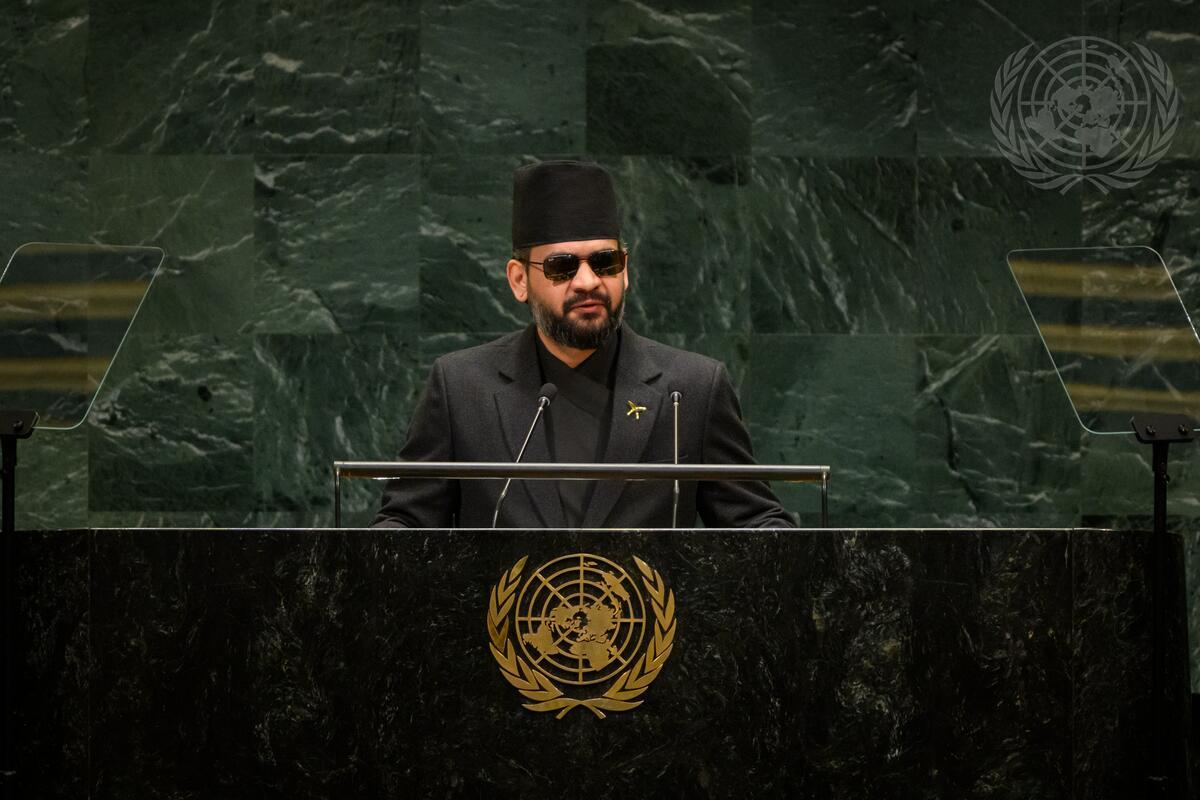
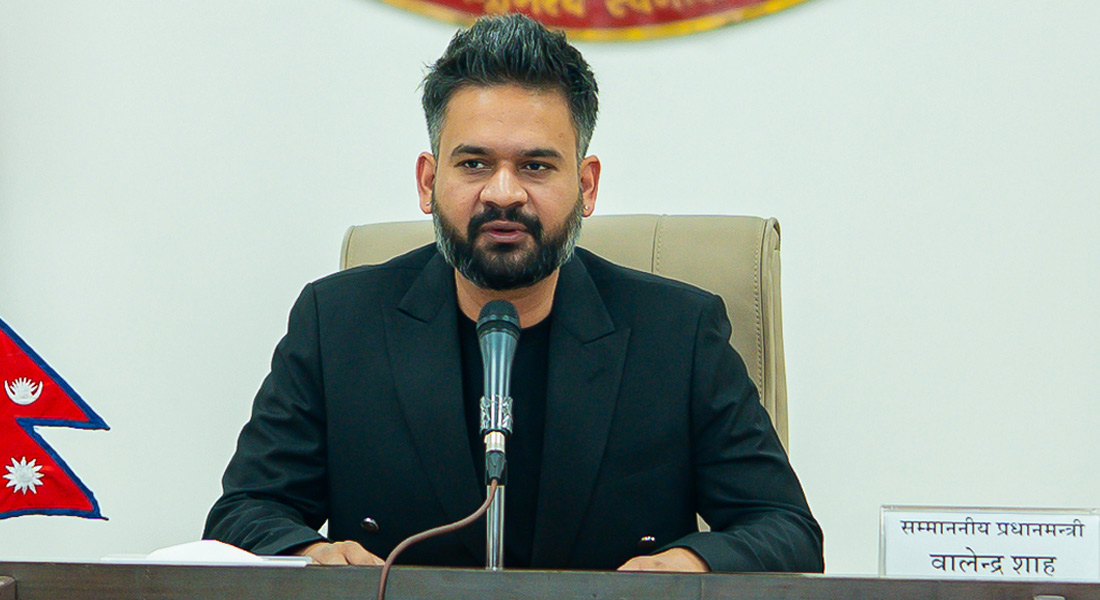
He said climate justice could not remain merely a phrase in United Nations documents. According to Shah, people in countries such as Nepal should have the opportunity to build their future rather than repeatedly rebuild what has been destroyed.
Shah proposed the establishment of a Himalaya Climate Resilience Mechanism, led by Nepal, India and China, as an immediate step to strengthen protection of the Himalayan region.
Under the proposed mechanism, he called for satellite data and expertise to be shared, dangerous glacial lakes to be monitored, joint early-warning systems to be strengthened and cross-border assistance to be coordinated when disasters occur.
Shah said the Himalayas should not be viewed only through the political boundaries of individual countries. He described the region as an integral part of the planet’s life-support system.
He said the Hindu Kush Himalayas are home to nearly two billion people and provide water, ecosystems, agriculture and livelihoods to populations far beyond Nepal.
Shah also highlighted Nepal’s environmental efforts, saying the country has restored forest cover across nearly half of its territory. He said Nepal is rapidly expanding hydropower to meet clean-energy needs and displace dirtier energy sources abroad, while also promoting electric vehicles and strengthening climate adaptation at the local level.
However, he said Nepal cannot build resilience alone against a crisis caused by failures in global governance.
Shah called on the international community to focus on six priorities: relief, rehabilitation, reconstruction, responsibility, compensation and resilience.
He said relief, rehabilitation and reconstruction are necessary after disasters, while responsibility, compensation and resilience are needed to prevent disasters from becoming a permanent condition for vulnerable countries.
Shah called for adequate grant-based international support, arguing that the response to climate disasters cannot consist only of new loans or small grants.
He also said existing mechanisms, including the Loss and Damage Fund and the Global Environment Facility, are not sufficient. Climate finance, he argued, should not become a bureaucratic maze in which vulnerable countries spend years seeking assistance.
Using the example of a house on fire, Shah said a family facing an emergency would not be expected to fill dozens of forms before receiving help. He said climate justice should follow the same principle of timely action.
The prime minister also broadened his speech to questions about the international system and global economic order. He said the United Nations was created from the experience of the Second World War with commitments to sovereignty, international law, human dignity and protection against a system in which weaker countries simply accept what powerful countries dictate.
Shah said the international system is under pressure and that military and economic power often determines whose voice is heard and whose conflicts receive attention. He said Nepal believes a fairer global economic order is needed.
Referring to the concept of “human security” developed in the 1994 UNDP Human Development Report, Shah said security should be connected to people rather than territory and development rather than weapons.
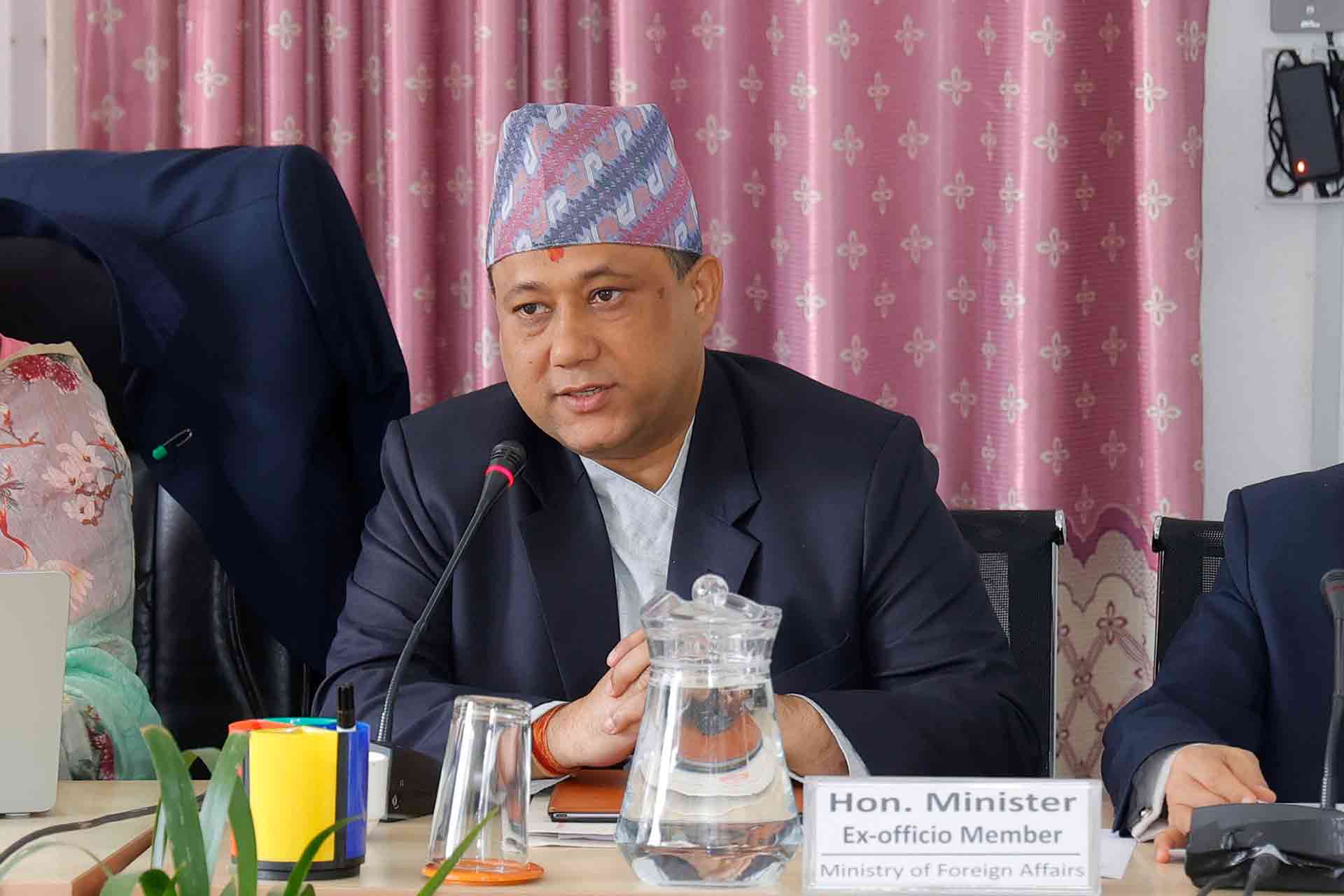
He also referred to Nepal’s new government and the challenges it faces in pursuing development. He said the government had received a new democratic mandate and that young people were demanding politics based on integrity and accountability.
Shah used the experience of a poor Nepali woman farmer unable to receive fertiliser on time during the monsoon to illustrate what he described as an imbalance in global priorities.
He contrasted the difficulty of obtaining fertiliser and fuel with the speed at which intercontinental missiles, rifles and ammunition can cross borders and reach their destinations.
“We have built a world with flawless logistics for war and broken logistics for food,” Shah said.
He urged world leaders to redirect resources spent on war and weapons towards humanity, development and food security.
Shah said the problem was not unique to Nepal and pointed to other countries in the region that also face climate change and the effects of conflicts they did not start.
He said these conditions demonstrate that more is wrong with global cooperation than is immediately visible.
Shah also referred to his position as one of the youngest heads of government addressing the General Assembly this year, saying he wanted the forum to clearly recognise that people should be able to obtain the means of livelihood when they are willing to pay for them.
He said there could be no justification for a world capable of delivering weapons anywhere within 72 hours failing to provide farmers with the means necessary for their livelihoods.
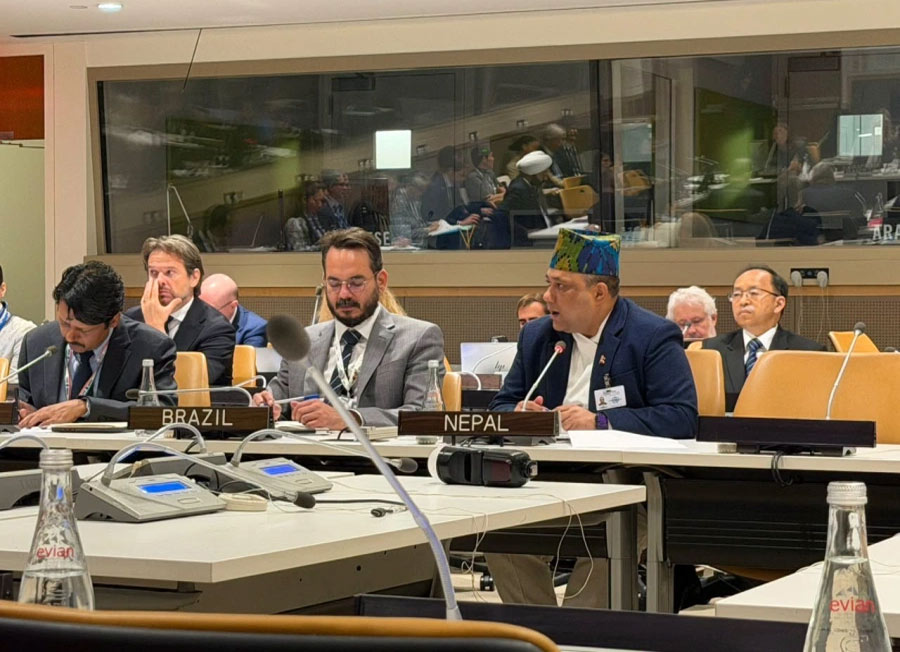
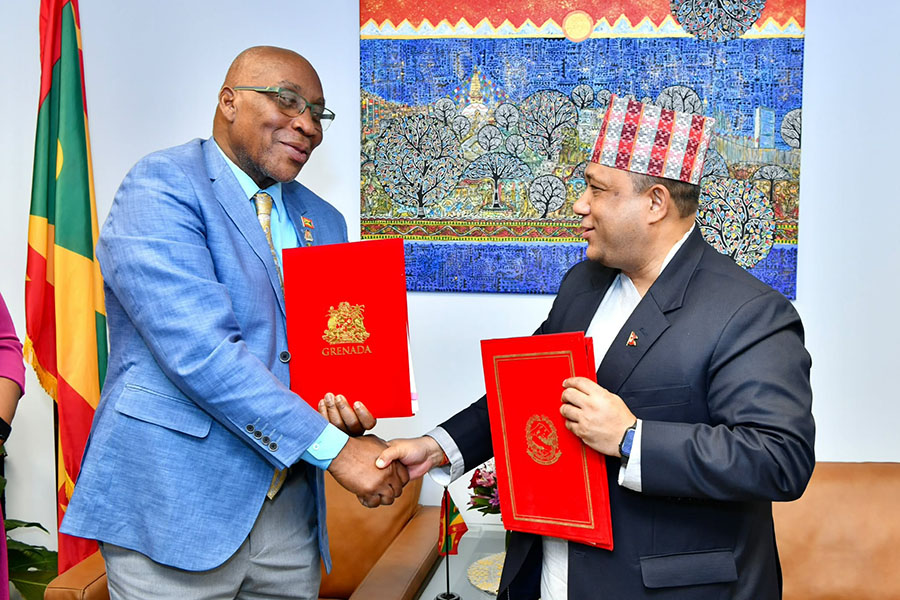
The prime minister reaffirmed Nepal’s commitment to multilateralism and called for a United Nations in which the presence and voice of small and poorer countries are felt.
He said climate justice is not only about money but also about distributive justice, including who bears the costs, and procedural justice, including whose voice is heard.
Shah said mountain communities, small island states, landlocked and least-developed countries and future generations should receive equal consideration in global decision-making.
He said Nepal is prepared to lead dialogue on these issues through the “Sagarmatha to Seaside” programme at the United Nations.
Shah also spoke about the aspirations of Nepal’s young population and the democratic mandate received by his government. He said young people were demanding integrity and accountability in politics and described this generational change as part of a wider awakening against conflict, inequality and lack of opportunity.
He said his government’s commitment was to build a state that provides decent employment, social security and fair opportunities for every Nepali to prosper at home.
Concluding his address, Shah said the recent floods in Nepal offered a glimpse of a future shaped by climate extremes. He called for a shift from ad-hoc responses towards a culture of preparedness.
He urged greater investment in resilience, insurance and innovation, along with stronger infrastructure and institutions. He also called for systems capable of providing warnings, raising alerts and saving lives, with greater attention to those most vulnerable.
Shah urged the international community to be prepared to listen and act when the next warning comes from the world’s highest mountain.