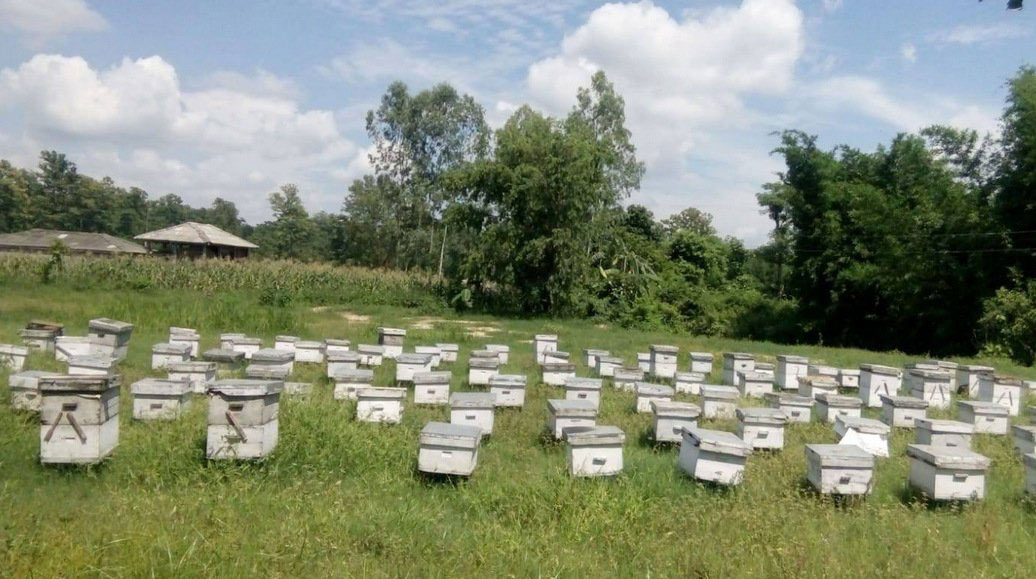
Chitwan, October 2, 2026 — Despite strong potential for commercial beekeeping in Nepal, climate change, shrinking forage areas, diseases and parasites, small hive beetle infestations and unregulated honey hunting are creating challenges for beekeepers and wild bee conservation.
According to Sujan Amgain, chief of the Beekeeping Development Centre in Bhandara, beekeepers have recently been facing multiple problems at the same time, including changing weather patterns, inadequate forage, diseases and parasite infections, and small hive beetle infestations.
Amgain said Apis mellifera accounts for 65 percent of Nepal’s total honey production, while Apis cerana contributes 28 percent and wild bees—including Apis dorsata, Apis laboriosa and Apis florea—account for 7 percent.
According to expert Joshi, Nepal has the capacity to maintain up to one million bee colonies based on its forests, farming systems and natural forage resources. With proper management and promotion, the country could produce more than 20,000 metric tons of honey annually, he said. Around 16,500 households across the country are currently directly involved in beekeeping.
Sudhir Shrestha, secretary at the Ministry of Agriculture, Livestock, Forest and Environment of Bagmati Province, emphasized the need for family- and consumer-friendly honey packaging. He said greater attention should be given to maintaining honey quality, attractive packaging and effective promotion.