Murdoch earned his semifinal place by defeating Japan’s Yunosuke Minami in the opening round. Rather than relying exclusively on striking, he finished the fight with an arm-triangle submission in the third round, demonstrating the wrestling and grappling ability that could prove crucial against Dhant.
That creates one of the central tactical questions of today’s fight.
Dhant has built much of his reputation around explosive striking and knockout power, while Murdoch has demonstrated that he can take an opponent down and finish on the ground. Dhant will therefore have to deal with a fighter capable of changing the fight from a striking contest into a grappling battle.
Murdoch also has a long combat-sports background. He grew up wrestling and boxing, inspired in part by his brother Shem Murdoch, who is also an MMA fighter, and represented New Zealand in boxing at the 2018 Summer Youth Olympics. Dhant’s camp has publicly acknowledged the depth of Murdoch’s preparation and experience.
For Dhant’s camp, however, the response has been preparation rather than distraction.
Coach Diwiz Piya has said Dhant has been training intensely in body and mind and is ready for the challenge. His team has also stressed the fighter’s hunger and work ethic, noting that Dhant returned to training in Bali only two days after his May victory over Alintozon and has continued working since.
Dhant himself has rejected the idea that carrying Nepal’s expectations represents pressure. Ahead of the fight, he described the support as a source of happiness and motivation rather than a burden. He has also indicated that he intends to trust the instincts developed through years of training rather than become overly dependent on a rigid fight plan.
That mindset is particularly relevant because this is a three-round semifinal. There will be little room for mistakes, and both fighters have already shown that they can finish fights.
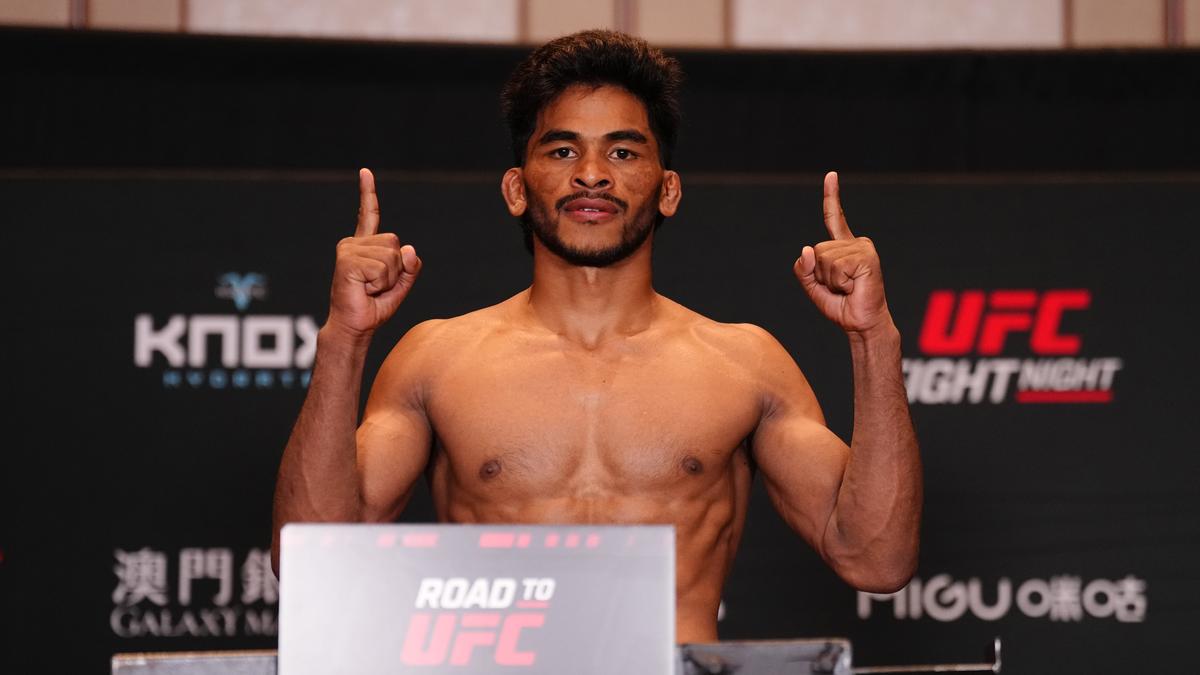
The official weigh-in confirmed another important factor: there is no weight advantage separating them. Both made the 135-pound bantamweight limit at 135.5 pounds. The matchup will therefore come down to technique, physicality, timing, conditioning and the ability to impose a preferred style.
The tournament context adds another layer.
The Road to UFC is specifically designed to identify leading Asia-Pacific MMA prospects and provide a route toward the UFC. The 16 fighters who reached the semifinals are now fighting for places in the tournament finals, with the eventual winners earning the opportunity to sign multi-fight UFC contracts.
For Nepal, that makes Dhant’s fight historic regardless of the outcome. No Nepali fighter has yet competed in the UFC. A victory today would put Dhant in the final and leave him just one fight away from changing that.
The hype surrounding the fight has already spread well beyond the fighters themselves. Nepali fans have followed Murdoch’s social-media provocations, Dhant’s quiet responses and the training updates from his camp. The nickname “Bajhang ko Baagh” has become closely associated with Dhant, while his trademark high-impact strike has even inspired fan-made songs, memes and social-media reels.
Thursday’s faceoff offered a brief pause before the real confrontation.
Today, there will be nowhere to hide behind social media posts or pre-fight words.
The cage will decide.
For Nepali viewers, the key time to remember is 2:45 PM today, when the Road to UFC semifinal card begins in Nepal. Dhant’s fight against Murdoch is expected later, with the current bout order placing it sixth and making approximately 4:15–5:30 PM NPT a reasonable expected window. Fans should tune in from the beginning because an early finish on the card could move Dhant’s fight forward.
If Dhant wins, the next destination will be the Road to UFC final—and the UFC will be only one fight away.